
Vanderbilt University Case Study
Cryptolyte® Eliminates Chloramines in High-Demand Aquatic Facility
Cryptolyte® Eliminates Chloramines in High-Demand Aquatic Facility
“Our priority is always providing the best possible environment for our student-athletes, and Cryptolyte® has helped us do that. In a high-demand indoor facility like ours, water and air quality matter every day. The start-up remediation phase required patience as the system worked through accumulated biofilm and contaminants, but once that process was complete, we saw a significant improvement in air quality and overall pool conditions. It has been a valuable addition to our operation.”
Will Jordan, Director of Operations, Vanderbilt University
Vanderbilt University women’s swimming is a Division I program that competes in the SEC. The Natatorium used for practice experienced a very active Aquatics schedule that consistently compromised the water and air quality due to high demand during swim team practice. High demand also occurred from heavy bather loads when nearby High Schools and swim teams utilized the popular facility, a problem many Aquatic professionals can relate to. The 470,000-gallon indoor pool has a 5-hr turnover using cartridge filters. The facilities air-handling system was not able to keep up with sufficient outside air exchange to offset the accumulation of chloramines in the air of the natatorium resulting from the 0.8 PPM (parts per million)+ CAC in the pool water. The facility incorporated a BECSys5 controller along with a Pulsar Calcium Hypochlorite chlorine feed system and a CO2 system for pH control. They typically were able to maintain 0.8+PPM combined chlorine with an ORP of 750-760mV and 2.5-3.0 PPM free chlorine. The normal routine was to open the outside doors and exhaust air using a large industrial fan to blow air across the surface of the pool before practice to reduce the concentration of irritants just above the pool water surface to help the athletes.
After demonstrating remarkable results at other Aquatic venues experiencing these common conditions, Duffield Aquatics – an Aquafinity Company with over 50-years of local chemical controls & treatment leadership, proposed and implemented a Cryptolyte® trial in December 2025. The BECSys5 was upgraded to a Cryptolyte® Control System by installing a flow-cell with a Cryptolyte® sensor and inserting a new Cryptolyte® program chip into the BECSys5 controller. A chemical feed pump was installed to feed the Cryptolyte®. A temporary acid feed system was installed to accelerate the remediation cycle during startup. Once the controller was rebooted, the system was ready to operate as an Integrated Cryptolyte® Control System. A Start-up Remediation Cycle was scheduled in the evening when the pool was closed. Cryptolyte® is applied as a Shock Treatment during start-up to Remediate not only the contaminants in the water (e.g. DBPs, organic contaminants etc.) but also destroy and remove accumulated Bio-films and any encapsulated Chlorine Resistant Pathogens from the entire circulation piping system. The patented Cryptolyte® controller Controls, Confirms & Documents the entire process.
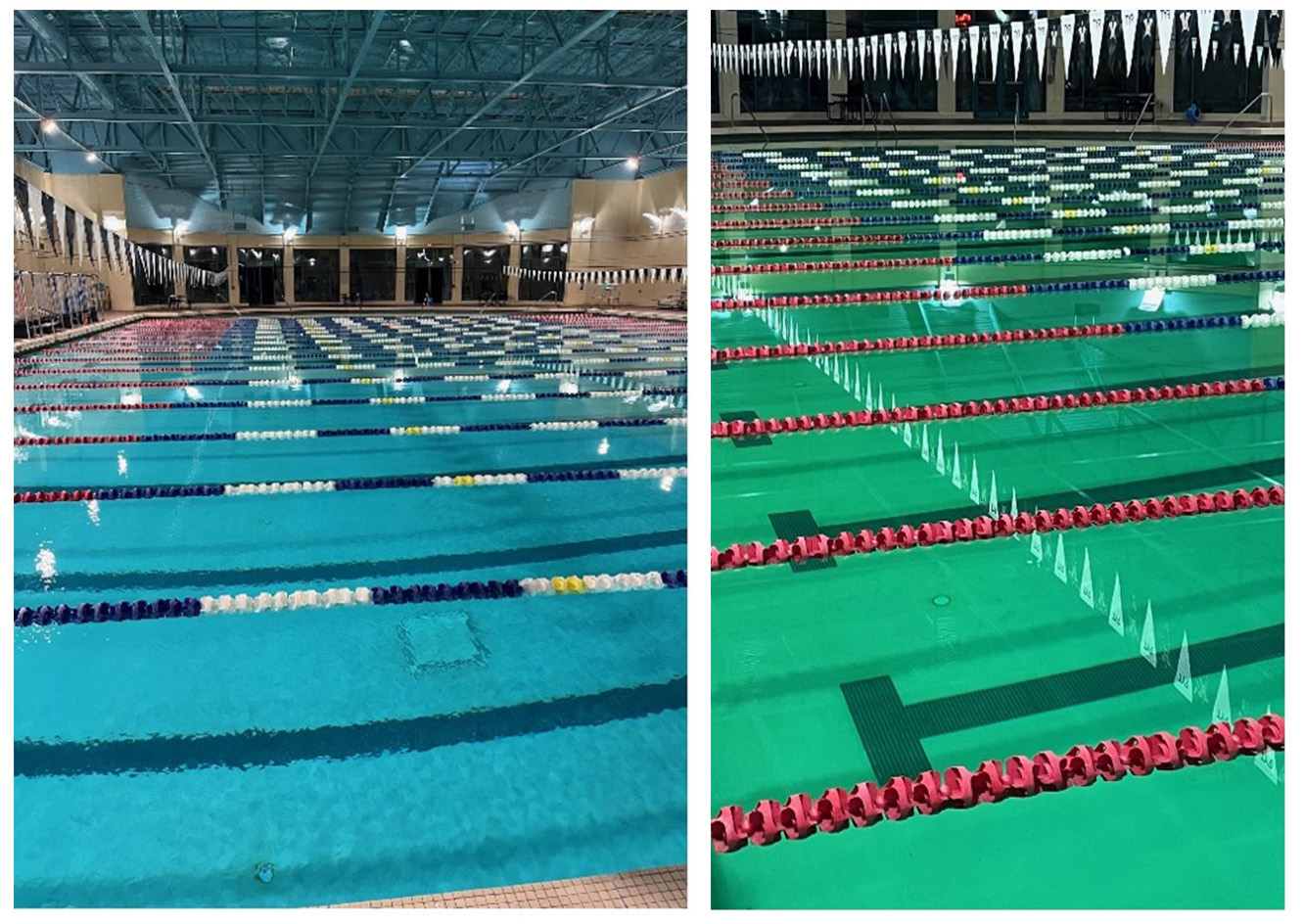
Figures 1 & 2 illustrate the change in the water color resulting from the implementation of the Startup Remediation cycle.
Cryptolyte® treats the ENTIRE system comprising the pool and circulating system, in contrast to Secondary Treatments (Ozone, UV and AOP) that only treat the water passing through the piping in the mechanical room. After the entire pool and circulating system was Remediated, the Cryptolyte® Controller was configured to perform “Continuous” Mitigation cycles to remove contaminants before they can accumulate and compromise the water and air quality as well as kill Undetected chlorine resistant pathogens thereby providing Safe-Water Assurance and a Healthy Environment.The cartridge filters were replaced to discard the accumulated demand released from the piping of the circulating system that severely fouled the filters, further evidence of the system’s effectiveness in cleaning the pool circulation system.
Following completion of the Startup process, the results have been dramatic.
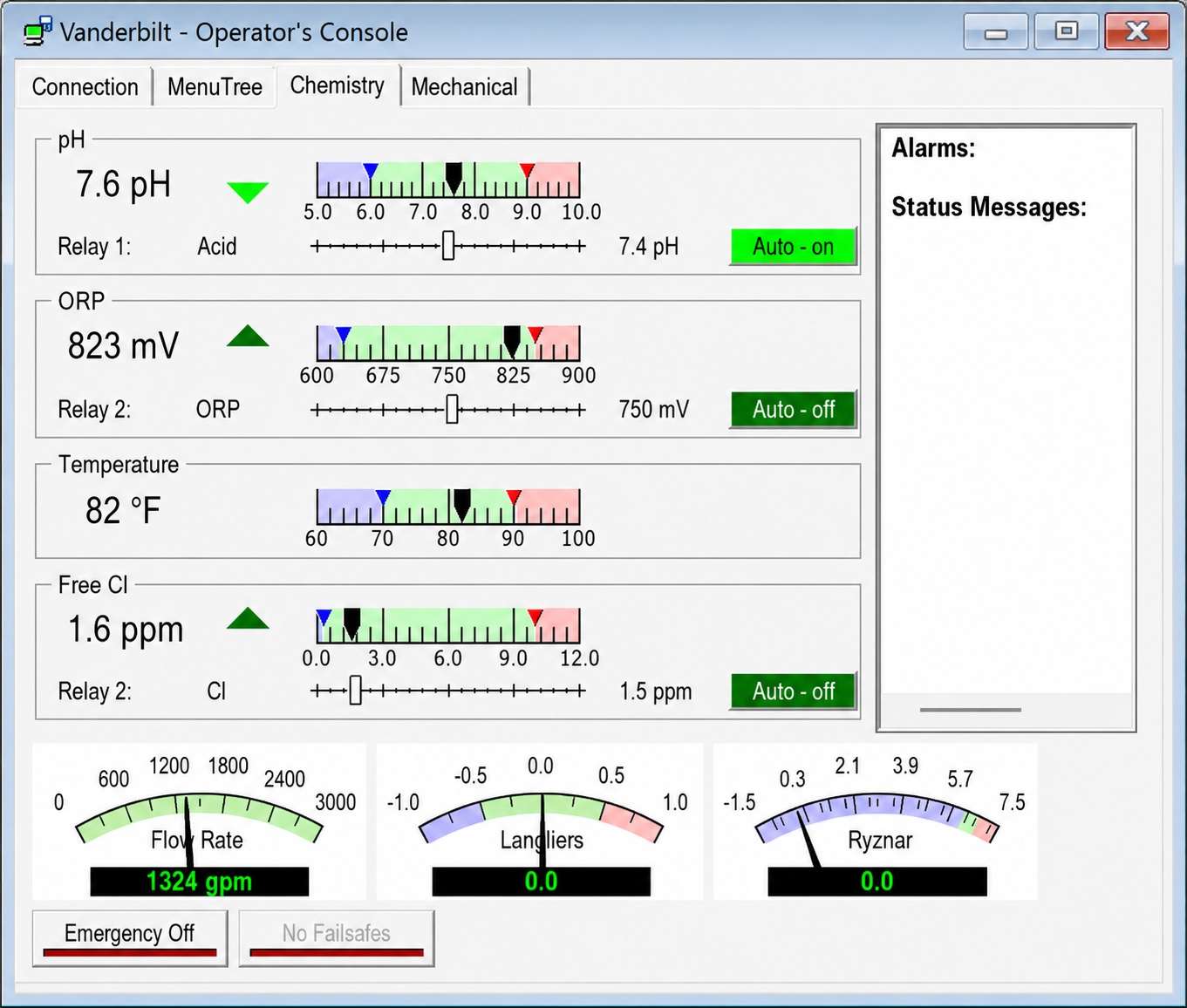
Figure 3 is a snapshot illustrating the typical conditions using the Cryptolyte® “Continuous” treatment program. ORP which provides a qualitative measure of the cleanliness of the water consistently operates at 820+mV with ~1.5ppm FAC. Combined chlorine has been reduced to and has been sustained at 0.0ppm (<100ppb).
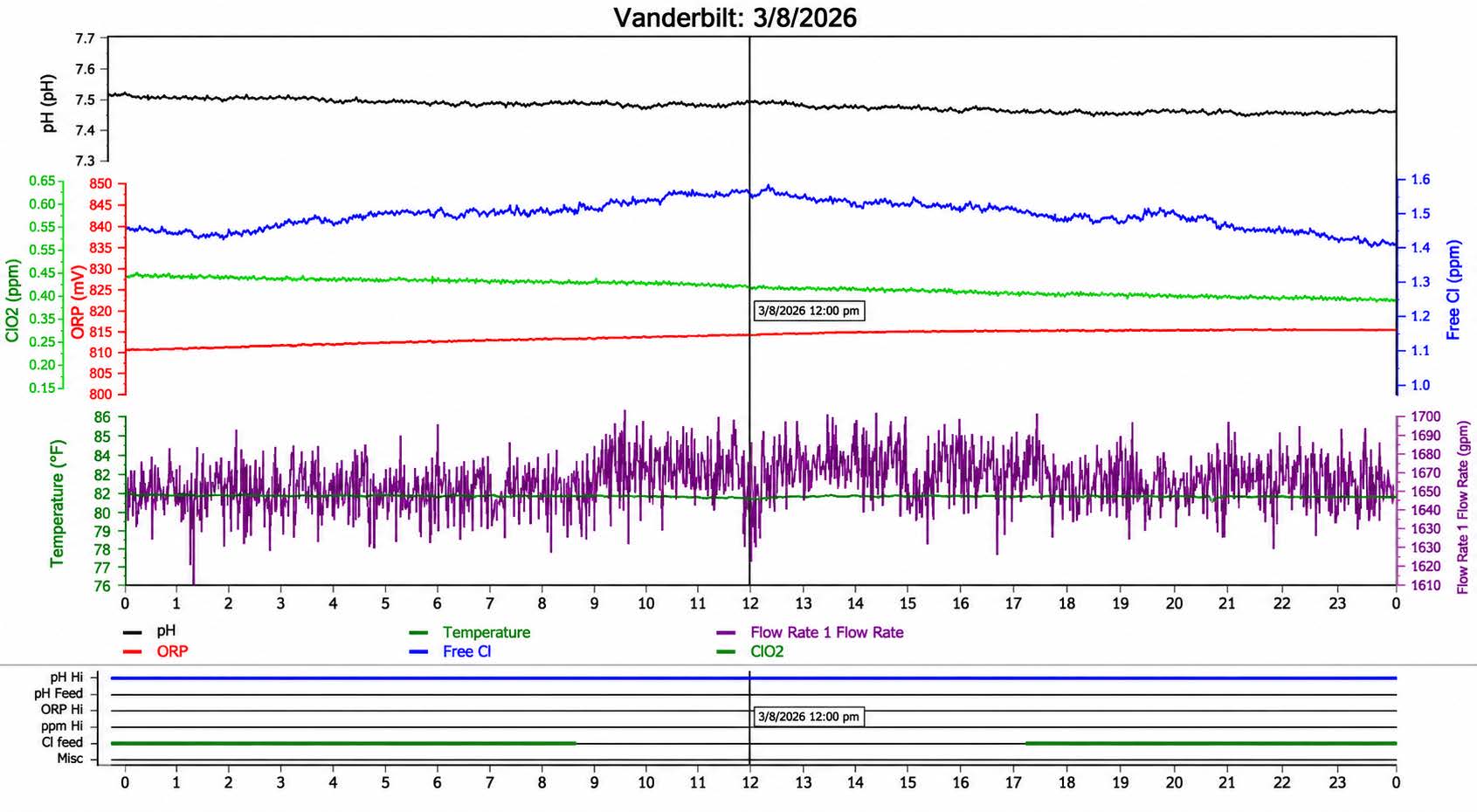 Figure 4 illustrates the control data and events logs highlighting the stable control of the critical parameters needed to sustain the pristine conditions. Continuous Mitigation Cycles are performed 24/7 (bright green line in Figure 4) using low levels of Cryptolyte® even while the pool is in use. Undetected Chlorine Resistant Pathogens that pose a risk are mitigated along with the removal of precursors and organic contaminants that lead to DBPs and poor water and air quality. Cryptolyte® is NSF 60 certified for use in Drinking Water at concentrations higher than those used during Continuous Mitigation. How Does It Work? While Cryptolyte® is the name of the EPA FIFRA registered treatment for killing 99.9% of Cryptosporidium in as little as 30-minutes, the Cryptolyte® Treatment Program is a comprehensive treatment encompassing Synergistic Oxidation, Application & Process Control that treats the ENTIRE pool system. This Patented technology provides Safe-Water Assurance and sustained combined chlorine of 0.0ppm (<100ppb) providing unprecedented Water & Air Quality regardless of the venue. The Cryptolyte® Treatment Program mitigates ALL forms of Recreational Water Illness (RWI) by attacking the sources of RWI.
Let’s review. In 2018 Dr. Blatchley, professor of Civil Engineering, Purdue University conducted a study funded by PoolPak, the dehumidifier company. You can download the paper at www.TruoxAquatics.com.
The study measured contaminants (i.e. Urea) and DBP concentrations in the pool water as well as chloramine concentrations in the air above the pool deck at a YWCA that had experienced chronic chloramine issues. Note that Urea is accountable for about 80% of chloramines produced in a swimming pool as it is found in perspiration and urine.
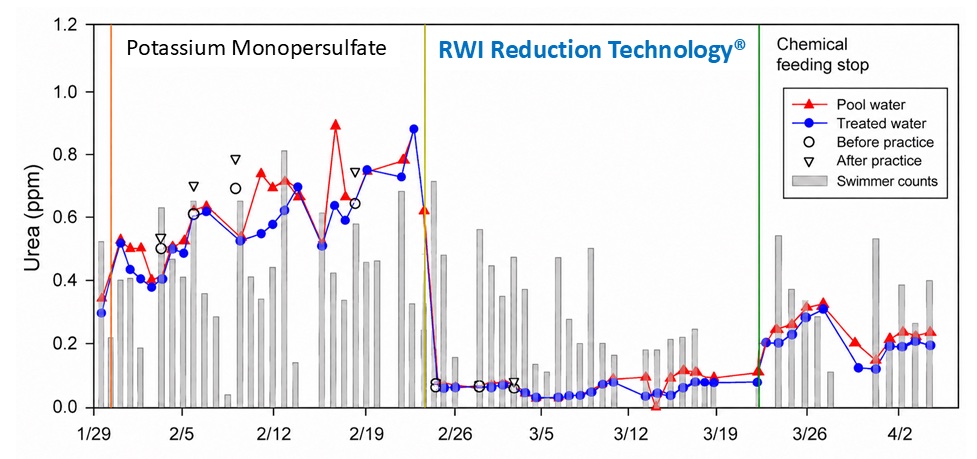
Referring to figure 5, when a secondary oxidant (potassium monopersulfate) was applied 24/7, there was no reduction in the measured urea concentration in the pool water. However, when the RWI Reduction Technology® was applied, there was a precipitous drop in urea even while the pool was in use. This illustrates that the PATENTED technology accelerates the destruction of the urea. Since 80% of chloramines are the result of chlorine reacting with urea, the drop in urea concentration should result in a precipitous reduction of chloramines in the pool water, and by default a precipitous drop of chloramines in the air!
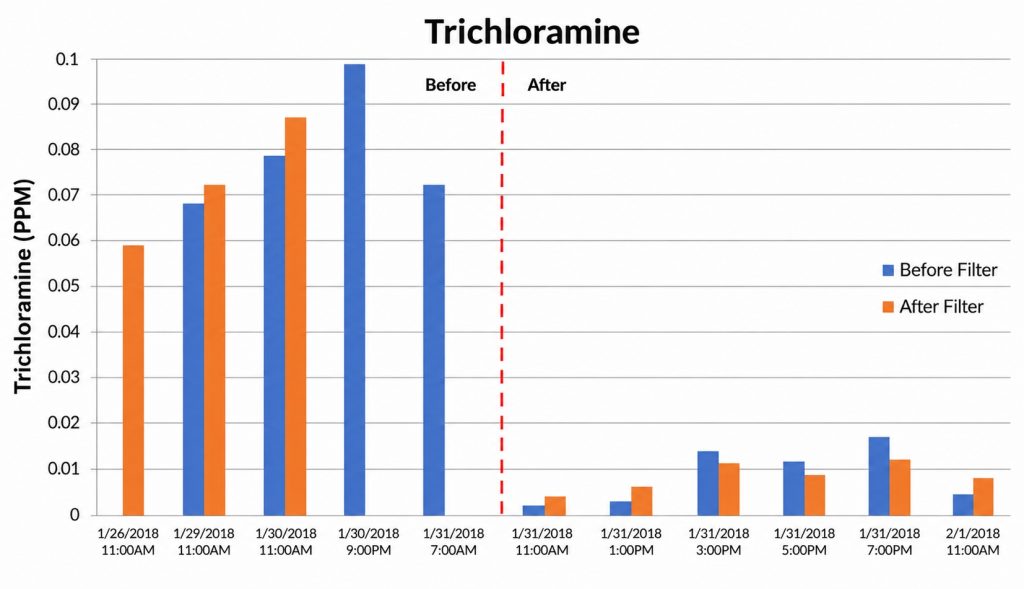
Without surprise, that is what happened. Within hours of adding the Patented & Patent Pending Activator blend, the trichloramines plummeted.
Conclusions
In 100% of the applications, the Cryptolyte® Treatment Program has successfully mitigated RWI at “High-Demand” Aquatic Facilities where Secondary Treatment and auxiliary chemical treatments have failed. The reason for Cryptolyte® success and their failures is clearly understood, Cryptolyte® addresses the underlying causes of RWI throughout the ENTIRE system where decades of treating the Symptoms using Secondary Treatments in the mechanical room or adding additional chemicals have failed. Cryptolyte® can be implemented with NO upfront cost and typically pays for itself with reduced chemical and energy savings, thereby allowing facilities to implement Cryptolyte® within their existing operating budget while providing Safe-Water Assurance, a Heathier Environment and superior Bather & Employee comfort.
Website by Outmark
